
One of the most stressful times in a relationship is when someone is uncertain whether the relationship should continue or come to an end. When they are unsure if they should stay or go. They feel trapped between two impulses, one that tells them I want to stay and the other that tells them I need to leave.
The pain of being in this relational limbo at times feels so unbearable that it is easy to assume the feeling of uncertainty is a symptom of the problem when really it is the opportunity that exists within the turmoil. Uncertainty provides an opportunity for the kind of reflection that eventually will lead to a resolution.
One has to accept the fact that certainty is rarely available in these situations—you won’t feel it and it is wasteful to sit around waiting for the moment that you do before you make a decision. The question is what should a person do if they find themselves in such a situation, and the answer is that they should focus not on achieving full clarity or insight, but rather they should focus on making a meaningful choice while accepting that some aspects of their decision, such as the other person’s response or future implications, are impossible to predict.
Why Uncertainty in Relationships Can Be So Consuming
Fear is one of the main reasons people struggle with uncertainty and deciding what to do in relationships. Fear is a core component of what makes uncertainty difficult to bear, and it reveals itself most clearly when one is contemplating whether or not they are about to make the “wrong” decision. The presence of fear can make someone feel like their relationship, maybe even their entire existence, is on the verge of collapsing, and they fear that once it does, once they make a decision that turns out to be the wrong one, they won’t be able to recover from it.
Connected to fear is hesitancy. The hesitation to encounter the grief that lies in waiting. Grief over the loss of the relationship and the loss of the future a person imagined. It is difficult for those on the outside to fully understand the shock that comes with the decision to leave a relationship. It is a choice that is rarely made without some degree of ambivalence.
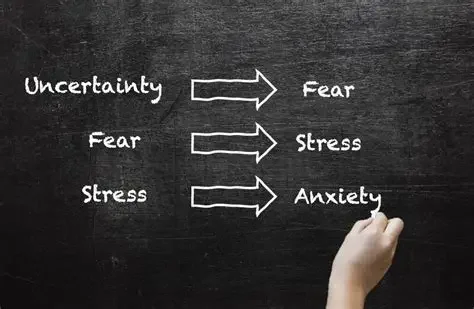
It breeds anxiety in multiple ways. Anxiety about being alone again, about being judged, about being seen as a failure. Anxiety about hurting the person you love, and the fear of not finding another person to share that kind of connection with. All these thoughts and considerations can consume someone if they let them, which is why the mind has a tendency to defend itself from such ruminations by seeking certainty and reassurance rather than wallowing in ambiguity. Still, it is important to be honest with oneself and recognize when there are doubts stirring inside of you.
The Dilemma & Unhealthy Ways of Coping With It
The crux of the dilemma is that no one can know with any real certainty what the future holds. No one can know in advance what will come of the decision to leave or stay. Gather as much information as possible, spend endless amounts of time engaged in reflection, learn how to communicate better, and none of it will change that fact. The path forward remains an uncertain one.
Whether leaving or staying, neither choice guarantees freedom from pain or regret. This being the case, a person’s true responsibility is to recognize that not choosing is also a decision, one that almost certainly prolongs pain and leads to regret, and out of all these options, is certainly the worst.
There are many ways to make the situation worse, the first of which is constantly seeking reassurance.This behavior manifests in the form of someone surveying friends and family and even strangers to try and build consensus and ascertain whether they should leave or stay. Endlessly seeking reassurance from others doesn’t work because you are seeking an answer that only you can provide. Whatever temporary relief is gained by going this route is quickly followed by more anxiety and doubt.
Even without outsourcing their decision to someone else it can be equally detrimental if someone gets caught up in over-intellectualizing. This behavior manifests as someone constantly replaying past conversations in their head in an attempt to fabricate new insights. Or it can look like creating the proverbial pros and cons list and modifying it over and over again without getting any closer to a solution. The problem with this strategy is that more thinking does not necessarily lead to more clarity.
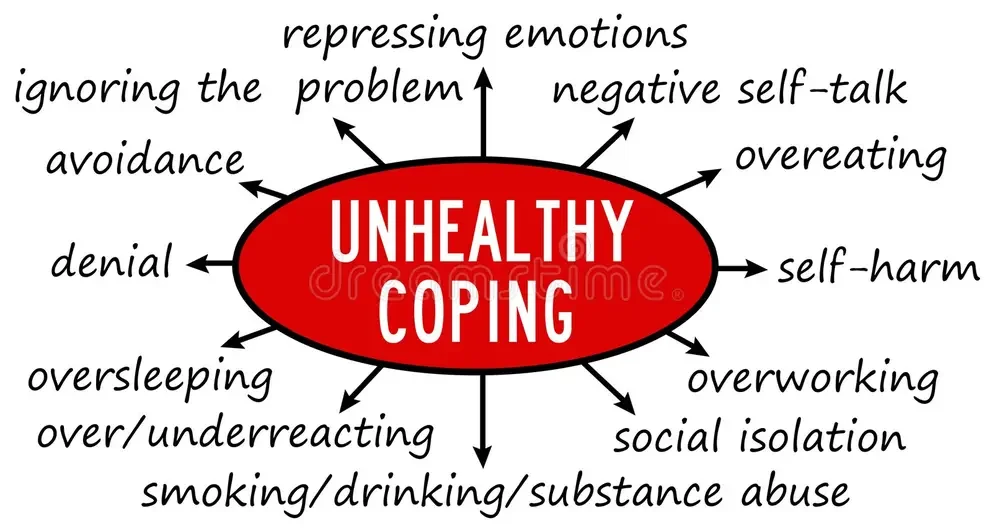
The next unhealthy way of coping is through avoidance and emotional numbing. Rather than sit with the feelings of uncertainty a person tries to get around them. They stay perpetually busy so they don’t have time to confront the question. They throw themselves into their work, someone else’s work, anything in order to avoid the issue.
The most drastic forms of avoidance lead to excess and excess leads to emotional numbing. It is possible for a person to lose themselves in an effort to escape their discomfort. They become reckless and impulsive, which has the peculiar benefit of temporarily eliminating the anxiety that comes with being uncertain. When you act on impulse there is nothing to be uncertain about because there is nothing to deliberate on—everything is decided instantly and by instinct alone.
The behaviors that provide a momentary reprieve from the discomfort of uncertainty tend to backfire in the end. The classic example is the person who abruptly ends a relationship without consideration of the consequences to themselves or others. They do so only to alleviate themselves of discomfort, and tend to regret their decision not long afterwards.
The last unhealthy strategy to discuss is the tactic of looking for the “perfect” sign in order to act. A person tells themselves they have to wait for a dramatic event or some kind of unmistakable feeling before they can make a decision, which is based on the faulty assumption that the answer to a problem must be clear and self-evident.
I’ve seen people convince themselves that they can’t act on what they feel—that if their significant other would only yell, insult, name call, or cheat on them one more time, then they would know without a shadow of a doubt that it’s the right time to leave. And of course when all of this does eventually happen, they find another reason to delay their decision. They squander their confirmation.
Healthy Ways of Coping with Uncertainty
These responses to relationship uncertainty are common, but there are healthier, more courageous ways of navigating these circumstances.
The key is to not think in terms of trying to dispel uncertainty, but learning how to make space for it instead. Acknowledging the uncertainty of a situation and taking the stance I don’t know yet is an honest and legitimate psychological position. It is okay to not yet have an answer to the question of whether to leave or stay in a relationship and for a person to take their time to discover what that answer is. Until then, they have to practice tolerating their discomfort without trying to make it disappear. As dangerous as uncertainty can feel, there is nothing legitimately threatening about it in most instances.
The path towards knowing isn’t defined by certainty but it is guided by values. Those values should be positive ones that are centered on honesty, intimacy, integrity, commitment, compassion, and growth. These are the kinds of values that lead to asking oneself, what kind of partner do I want to be? What kind of relationship do I want to build? What kind of life do I want to create? Values should inform your decisions instead of allowing fears to make them for you.
It is important to look past hypotheticals and examine relationships for what they actually are. How does it actually feel to be with a particular person? Can you be yourself with them? Is there space to repair after conflict? Are you becoming the person you want to be by virtue of being in this relationship? What does it actually feel like to exist within the inner circle of this bond?
While I do think it is a mistake to constantly seek reassurance from others and poll them for their opinion, there is a difference between doing that and engaging in perspective-taking in order to clarify your own. When it comes to solving problems, other people's answers are ineffectual, but their perspectives can be helpful because they allow the individual to see their own more clearly.
It is wise to take time and reflect before making a major decision rather than acting on impulse, and it is also wise to seek out trusted opinions from family, friends, a therapist, if they have experience in what you’re dealing with. Ultimately no one can tell another person which life they should choose for themselves, but it helps for a person to have support as they try to move closer to it.
The last helpful strategy, which may be the most mature one, is the practice of acceptance. One accepts, from the very beginning, that grief will accompany any choice they make, even if it is the right one. A painful decision isn’t necessarily a wrong decision. The choice to leave can involve grief, but the choice to stay can torment just as easily through the specter of the life that is never lived. Both reactions are acceptable, and neither is necessarily a sign that you made the wrong decision.
The Paradox
It is okay to make a choice without the comfort of certainty. Maturity doesn’t always require clarity, full confidence, or the absence of doubt. Sometimes it requires a person to make a choice to act even while being aware that they cannot know for sure what the outcome will be. The goal is not to preserve the perfect future. The goal is to make a conscious choice and take responsibility for the life you are living.
Uncertainty is a part of life and it is possible to feel uncomfortable without viewing it as pathological. Clarity might come through reflection or it might come through action and lived experience. Since it’s impossible to know beforehand which choice, if any, will guarantee happiness, a better goal is to make the choice one can honestly live with.