
Reflection No. 11 — Are You Basho or Tennyson?
People come to therapy because they are suffering from a lack of purpose. They are seeking guidance on how they should live and what they should live for.
This presents a significant challenge for the psychotherapist who mistakenly believes they can actually guide another person directly towards their life purpose. They can’t—the best a psychotherapist can do is act as witness and preside over someone else’s journey as they discover what it is that makes them come alive.
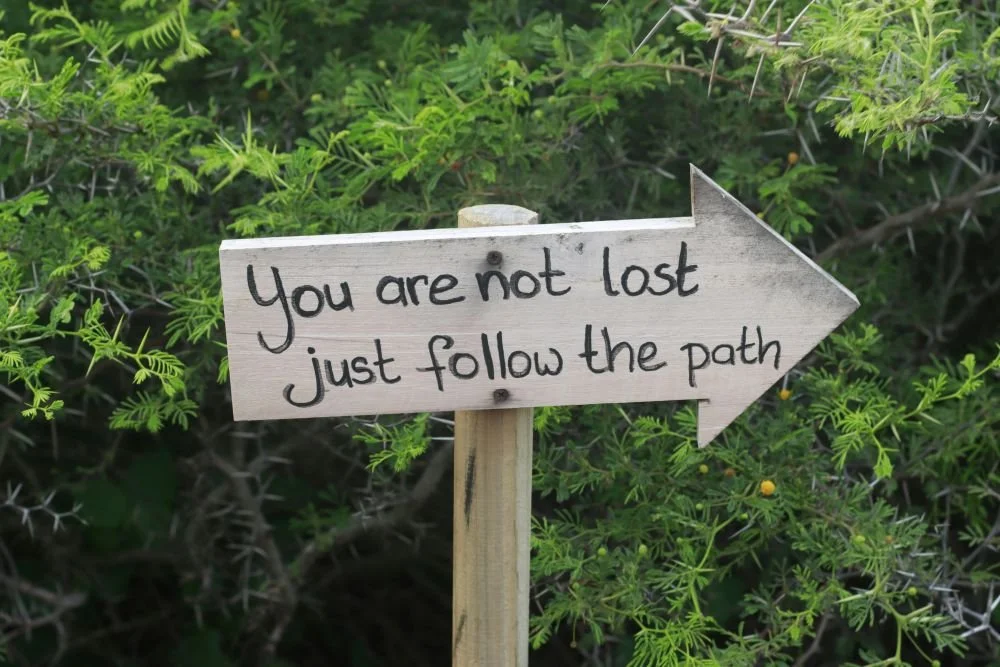
What we do know is that purpose requires more than rote and mindless striving. It requires moving past the superficial and exploring the deeper boundaries of one’s experience. Part of the problem seems to be that we obsess over discovering the purpose of life through the intellect instead of being open and responsive so that we can experience life to the fullest extent possible. We incorrectly assume that purpose is a prerequisite to full living when it is the opposite.
Basho was a famous Japanese poet who was considered the greatest haiku writer of his time and Tennyson was a famous English poet from the Victorian era. The answer to the question of whether you are one or the other depends on the way you choose to approach life. Each man used poetry to express their view on life and living. Life can be treated as a puzzle meant to be solved or it can be treated as a mystery meant to be experienced.

Tennyson’s poem expresses the first sentiment:
Flowers in the crannied wall,
I pluck you out of the crannies;—
Hold you here, root and all, in my hand.
Little Flower—but if I could understand
What you are, root and all, and all in all
I should know what God and man is.
If the flower is a symbol of life, Tennyson intends to poke and prod and probe at it until he can understand its secrets. He wants to drill down to the very root of it in order to understand its essence. This same attitude guides Tennyson’s approach to searching for life purpose.
Meanwhile, Basho is uninterested in analyzing and probing and is content to simply marvel at what is. His poem reads:
When I look carefully
I see the Nazuma blooming
By the hedge!
Basho acts as a witness and allows himself to be filled with excitement at the sight of existence. Because he looks carefully he does not have to dig as deeply. For him, the essence of things is all right there on the surface and there is nothing to ponder and nothing to struggle with.
Both approaches are valid—the only error is restricting oneself to experiencing life only through one lens. There is beauty in analyzing and formulating ideas, and there is beauty in harmonizing and integrating with what is. There is beauty that comes from stepping into one’s purpose, and there is beauty that comes from stepping out of it and seeing where life takes you.

Reflection No. 9 — Why Success Has No Deadline
So many of people think that life is over if they don’t achieve their goals by a certain point in time. Usually, the date that is set is arbitrary and comes much too soon. People think that if they haven’t realized their dreams by 25 that they never will but that is a foolish and destructive way to think.
Most people are barely even aware of who they are at 25, much less what they want, and many people will enter into their 30’s still with only a vague notion as they try to figure it out. You should not let the narratives you see and hear on social media trick you into believing that this is not the case. In fact, some of the greatest achievements of humankind have been accomplished by late bloomers. People who were well past the point in life when they were supposed to be successful according to society’s standards.
Popular examples are people like Ford and Edison, both of whom did not achieve success until after 40 and represent the quintessential rags to riches story.
Some of my favorites in this category are people like Toni Morrison, Sharon Jones, Charles Bradley, and Charles Bukowski. Lesser-known figures to be sure, but all of them possessed the same strength of will that told them to keep going, defy the odds, and define success on their own terms.
No one has it all figured out, and you don’t have to succumb to the notion that you’re supposed to. You’re not. No one arrives at a point where everything is forever perfectly aligned. Maybe you’ll experience it from time to time, but only for a moment, and what you soon find out is that life is mostly about just having the courage to try, regardless of whether you succeed or not, and then you find out that the greatest achievement is in having the willingness to, if necessary, start all over again.

Reflection No. 7 — Start Small. Speak Truly.
It’s not easy to find your own voice, but it’s worth the effort, and it’s better than the alternative. Most people use someone else’s voice when they speak without even noticing it. They adopt someone else’s beliefs and values and keep on repeating them and using them, even when there are better options. Which creates another problem. When people don’t take the time to find their own voice, they become stagnant mentally and emotionally.
It seems like the longer people wait to find their voice the harder it is to find it at all. The more work they have to do to wade through the thoughts and opinions that are not their own. Thoreau talked about men who lived lives of quiet desperation. There are many ways to live a meaningful life, but a common theme among all of them is choosing not to resign themselves to this quiet desperation.
Finding your own voice is an act of rebellion. Sometimes it is a battle. Breaking out, rebelling, can happen through small daily actions that might not be noticeable to anyone else, but they still have an impact and they still matter.